
Memory Games Test Recognition. Real Life Asks for Recall.

Recognition supplies the answer
Recognition means identifying something you have encountered before, with options or cues supplied. A familiar face, a matching image or a multiple-choice answer can prompt a correct response. Recall is different: you must produce the name, location or fact yourself, with nothing on the table to point towards it.
That distinction is well established. In a 2002 review of three decades of research, Andrew Yonelinas describes recognition as drawing on familiarity, a general sense that something has been seen before, and recollection of specific detail. The review also reports that recollection is more sensitive than familiarity to divided attention. That helps explain why a name can disappear during an introduction and return when you hear it again. This is a literature finding, not a clinical conclusion about puzzles.

What memory games usually test
Recognition is not a cheap skill; it is simply easier because the situation supplies the options. Many memory games give you fixed material, a scoring rule and immediate feedback. After a few rounds, your score can rise because you learn the set, scan in a consistent order or rehearse during pauses. That improvement is real, and it belongs to that game. The harder question is whether the same habits travel beyond its boundaries.
Image matching, pattern spotting and multiple-choice challenges are legitimate. They ask you to discriminate among possibilities, notice detail and make a decision. The issue begins only when a recognition drill is treated as proof that recall has been trained, then the gap appears where no options are available.
Putting recall back into the puzzle
Recall happens when you retrieve something without being shown the answer: the name of someone you met once, where you left your keys or the third item on a list you never wrote down. That is where memory games can become more useful: remove the cue that was doing part of the remembering for you.
Try three short drills:
Cover the reference image after completing a puzzle, then describe what you remember seeing.
Name three places a particular piece went, without checking.
For a new name, say it aloud while picturing the person’s face.
None takes longer than a minute. They feel harder because retrieval is slower than recognition and failure is visible. That discomfort is not a flaw in the exercise; it is the part that makes you practise pulling information back on demand.
What the practice is actually training
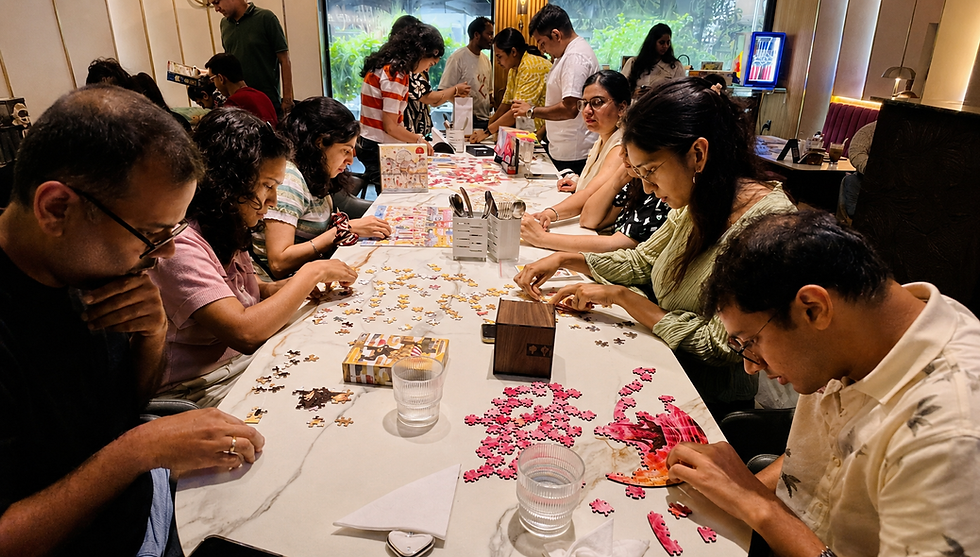
Remove the cues and you stop rehearsing a set; you start rehearsing retrieval: the act of pulling something back on demand. That skill fails in the corridor after an introduction, and it needs no app or scoreboard. Working with others adds a layer; shared puzzle activities let mistakes surface early, and another method may free the section blocking you.
Give recall a turn
Memory games can be worth playing; be clear about which job they train. Recognition practice is not pointless, and recall practice is not a test of whether your memory is “good.” Give both a turn, especially when you want the skill to travel beyond the page. The Puzzle Maniacs’ CircZle Therapy is a relaxed gathering to sharpen minds and enjoy the art of CircZle-solving.
Explore puzzle events in India to find a session that fits.

Comments