
The Real Reason Adults Quit Hobbies (And How Puzzles Fix That)
- Feb 25
- 4 min read
Updated: Apr 9
Remember when you used to paint? Bake sourdough? Play guitar? Yeah, that lasted about three months, didn't it?
Here's the thing: you didn't quit because you weren't good at it. You didn't even quit because you didn't enjoy it. You quit because your hobby started feeling like another item on your to-do list. And that's the trap most adults fall into.
The Real Culprits Behind Abandoned Hobbies
Let's be honest about what's actually happening when adults drop hobbies left and right.
Time isn't really the problem. You technically have time. You scroll social media for 45 minutes a day. You binge shows on weekends. The issue is that hobbies feel like they require blocks of time, dedicated, uninterrupted chunks that you just don't have anymore between work emails, family dinners, and that growing pile of laundry.
Guilt is the silent killer. When you finally sit down to do something just for fun, a little voice whispers: Shouldn't you be doing something productive? That half-hour of enjoyment suddenly feels selfish. You've internalized this idea that leisure needs to earn its place in your schedule, and fun for the sake of fun doesn't make the cut.
Your hobbies turned competitive. You started comparing yourself to Instagram experts who've been at it for years. You expected to be amazing on attempt three. When you weren't, the hobby stopped being fun and started feeling like failure. Adults do this weird thing where we turn every interest into a performance review.

And then there's your attention span. After eight hours of decision fatigue at work, your brain doesn't want to learn a new skill or follow complex instructions. It wants something that feels good now, which is why doomscrolling wins over that pottery class you paid for.
Why Traditional Hobbies Feel So Exhausting
Most adult hobbies come with baggage:
Setup time (finding supplies, clearing space, prepping materials)
Commitment pressure (memberships, classes, meeting schedules)
Performance anxiety (what if I'm bad at this?)
Decision overload (too many options, techniques, "right ways")
Social comparison (everyone else's perfect results on social media)
No wonder you quit. Your hobby started demanding more mental energy than it was giving back.
Enter: Puzzles (The Anti-Stress Hobby)
Here's what makes puzzles different, and why they're quietly becoming the go-to hobby for burned-out adults.
Zero setup guilt. Open the box. Start solving. That's it. No supply runs to the craft store. No watching three YouTube tutorials first. No "proper technique" to master before you can begin. You can literally start in the time it takes to clear a space on your coffee table.
Built-in stopping points. Unlike painting or writing or woodworking, puzzles don't punish you for walking away mid-session. Found three pieces? Great. That's progress. Need to stop after five minutes because your kid woke up? No problem. The puzzle will be exactly where you left it, not judging you for your lack of commitment.
No comparison trap. There's no "good" or "bad" at puzzles in a way that triggers inadequacy. You either solve it or you don't, and spoiler alert, everyone gets there eventually. No one's posting their puzzle times on Instagram making you feel like a failure (okay, some people are, but puzzle culture isn't built on competition the way running or art can be).
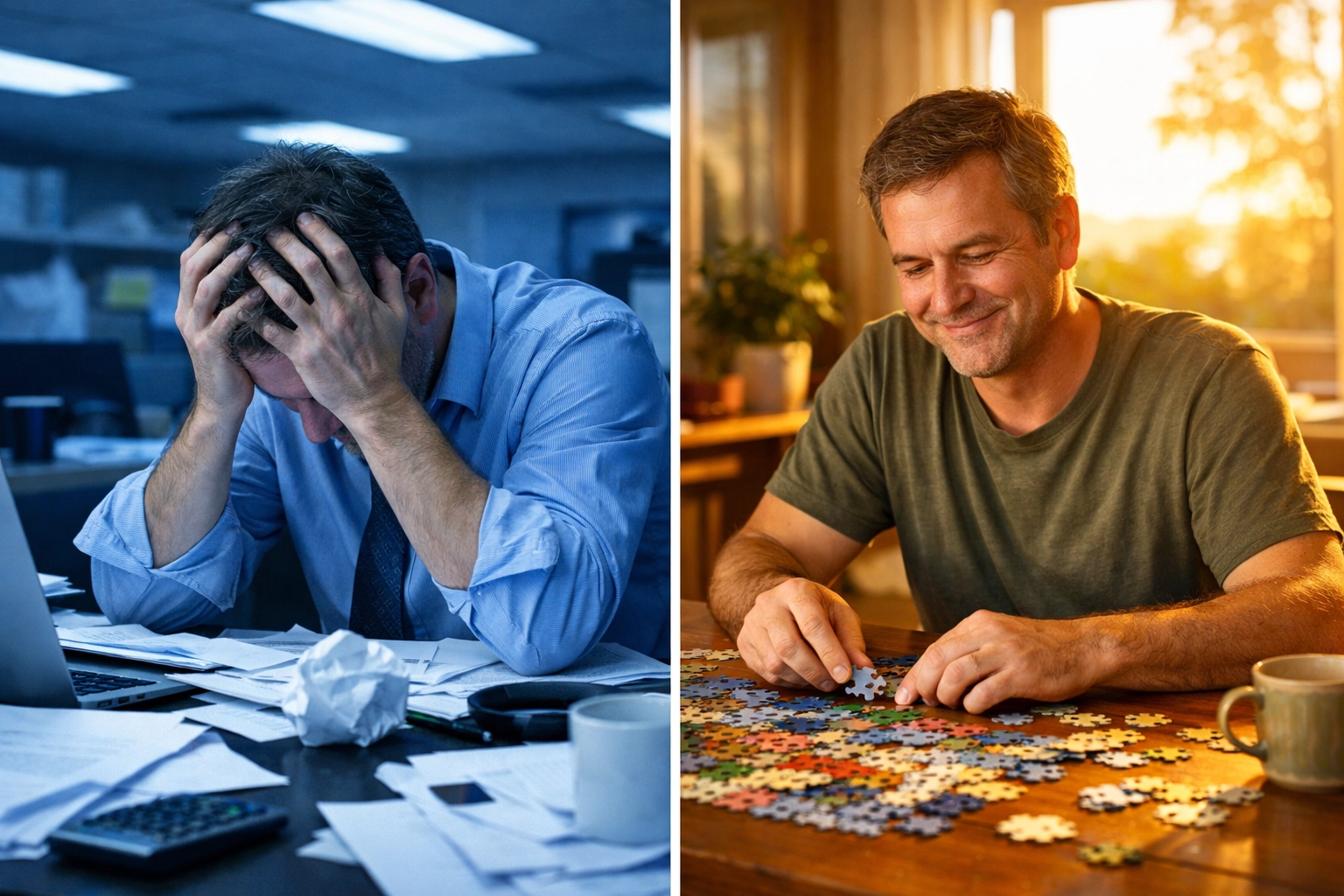
They meet you where you are. Exhausted after work? 50-piece puzzle. Need a weekend challenge? 1000 pieces. Want social time? Group puzzle events exist. Want solitude? Solo works too. Puzzles scale to your available energy, which most hobbies absolutely do not.
The Puzzle Therapy Effect
There's actual science behind why puzzles work when other hobbies fail: and therapists have caught on.
Puzzle therapy leverages what's called "flow state": that feeling of being completely absorbed in an activity without forcing concentration. Your brain gets a break from ruminating about work stress or life chaos because it's genuinely engaged in pattern matching. Unlike meditation (which many people struggle with), puzzles give your anxious mind something to do while achieving the same calming effect.
The tactile element matters too. Picking up pieces, rotating them, fitting them together: these physical actions trigger your nervous system to downshift from fight-or-flight mode. It's why puzzles feel more restorative than scrolling your phone, even though both are technically "low effort" activities.
And here's the psychological win: puzzles provide guaranteed progress. In a world where work projects drag on forever and life feels chaotic, completing even a small section of a puzzle gives you a clean, visible win. That hits differently when everything else feels uncertain.
How to Actually Stick with Puzzles (When You've Quit Everything Else)
Start stupid small. Not 1000 pieces. Not even 500. Get a 100-piece circular puzzle and finish it in one sitting. Let yourself feel that completion dopamine hit.
Remove the "should" energy. You don't have to puzzle. You're not "getting better" at puzzles. You're not training for anything. You're literally just... doing something that feels good in the moment. That's the whole point.
Make it stupidly accessible. Leave a puzzle out on your table. Put it somewhere you naturally pass by. The easier it is to do a few pieces while waiting for water to boil or during a phone call, the more you'll actually do it.
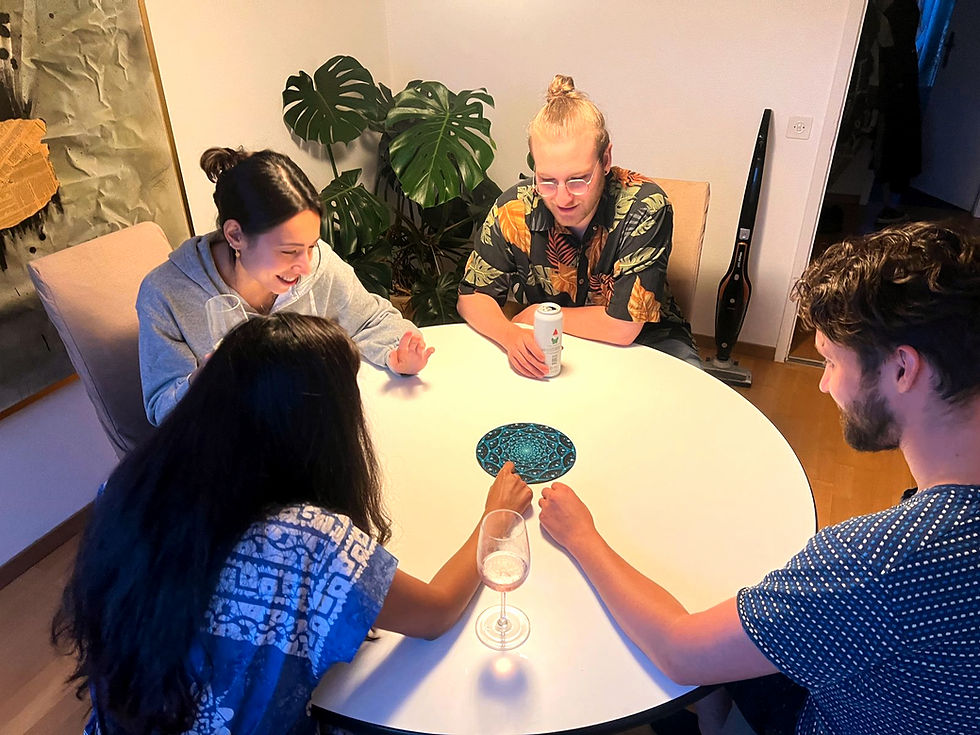
Let it be social OR solo. Some nights you'll want to puzzle alone with a podcast. Other times you'll want the social puzzle night vibe. Both count. Both matter.
The Bottom Line
You didn't fail at hobbies. Your hobbies failed you by demanding more bandwidth than you had to give.
Puzzles work because they're the rare hobby that adapts to your chaos instead of adding to it. No guilt. No performance pressure. No time commitment beyond what you actually have in this exact moment.
That guitar gathering dust in your closet? Still there whenever you're ready. But maybe: just maybe: the reason puzzles are sticking when everything else didn't is because they're asking less while giving more.
Ready to actually stick with a hobby for once?Check out our puzzle events designed specifically for adults who are tired of forcing fun. Low pressure. High satisfaction. Zero guilt.
Because sometimes the best hobby is the one that doesn't feel like work.
Comments