
Team Building That Actually Works: Neuro Workout Sessions Explained
Updated: Apr 10
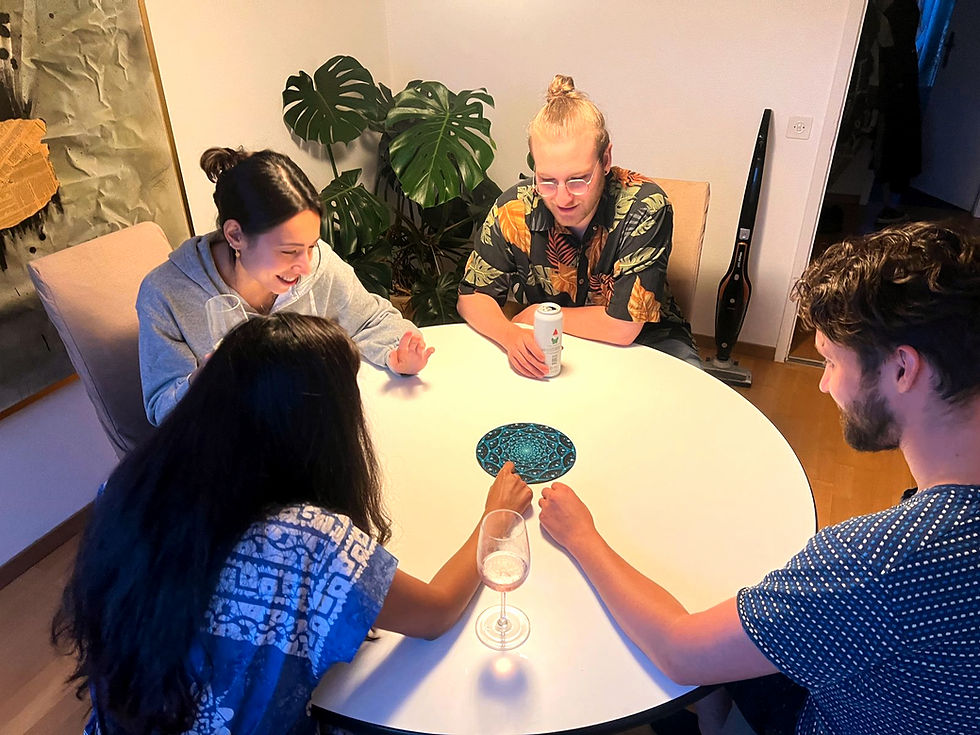
Puzzle Maniacs’ Neuro Workout Session turns corporate team building into a fun, high-impact puzzle workout—boosting focus, collaboration, and problem-solving with premium CircZle puzzles.
Tired of trust falls and awkward icebreakers? At Puzzle Maniacs, our Neuro Workout Session is a facilitated, puzzle-driven event that blends cognitive training with social fun. Using premium CogZart CircZle wooden jigsaw puzzles, teams practice quick decision-making, clear communication, and agile thinking—without screens or stiffness. It’s team building that feels like play and works like training.
What Is a Neuro Workout Session?
A hosted corporate team building experience built around CircZle puzzles, time-boxed challenges, and light competition. Your group solves, iterates, and debriefs—guided by our facilitators—so the lessons transfer back to work.

Why It Works (Event Outcomes You Can Use Monday)
Sharper collaboration: Roles and checkpoints reduce cross-talk, increase throughput.
Cognitive boost: Visuospatial reasoning, working memory, and flexible thinking get a real workout.
Psychological safety: Low-stakes puzzles create high engagement without performance anxiety.
Actionable debrief: We translate puzzle tactics into meeting tactics you can immediately adopt.
What You Will Get (At the Event)
Premium CogZart CircZle puzzle sets (spill-resistant wooden pieces; event-friendly)
Time trials & sprints to practice speed under constraints
Who This Event Is For
Hybrid/cross-functional teams needing fast rapportwooden puzzle
Leaders & HR/L&D seeking experiential corporate team building
Wellness champions who want a screen-free reset with measurable skills
Offsites & kickoffs that need energy, structure, and shared wins
How a Typical Session Flows
Warm-Up (5–10 min): Quick sort, roles, rules.
Core Challenge (35–60 min): CircZle sprints with timed checkpoints.
Adaptation Round (10–15 min): Constraint change (role swap, silence minute, tighter clock).
Showdown (5–10 min): Friendly stakes, optional leaderboard.
Debrief (10–15 min): Wins, blockers, and 3 behaviours to carry into work.
Citation:
Klein, C., DiazGranados, D., Salas, E., Le, H., Burke, C. S., Lyons, R., & Goodwin, G. F. (2009). Does team building work? American Psychologist, 64(3), 187–204. https://doi.org/10.1037/a0014315
McEwan, D., Ruissen, G. R., Eys, M. A., Zumbo, B. D., & Beauchamp, M. R. (2017). The effectiveness of teamwork training on teamwork behaviors and team performance: A systematic review and meta-analysis. PLOS ONE, 12(1), e0169604. https://doi.org/10.1371/journal.pone.0169604


Comments